


Kansas Geological Survey, Public Information Circular (PIC) 24
May 2006
Revised November 2021
Liz Brosius
Kansas Geological Survey
A PDF version is available here
Kansas rocks are full of fossils. From shell fragments in a chunk of gravel to spectacular specimens in museum displays, Kansas fossils contain important evidence about the history of life on Earth.
The state's most common fossils are invertebrates—animals without backbones. Familiar invertebrates living today include insects, snails, clams, and corals. Fossils of these and other types of invertebrates are frequently found in Kansas rocks. Although often overshadowed by the state's vertebrate fossils (such as sharks' teeth or the skeletons of huge swimming reptiles called mosasaurs), Kansas invertebrate fossils are nonetheless scientifically significant. They provide vital snapshots of ancient life in the warm seas and tropical swamps that once covered the state during much of its geologic history.
Geologists have determined that Earth is about 4.6 billion years old, and they divide that time into a hierarchical series of units—eons, eras, periods, and epochs—that make up the geologic time scale (fig. 1).
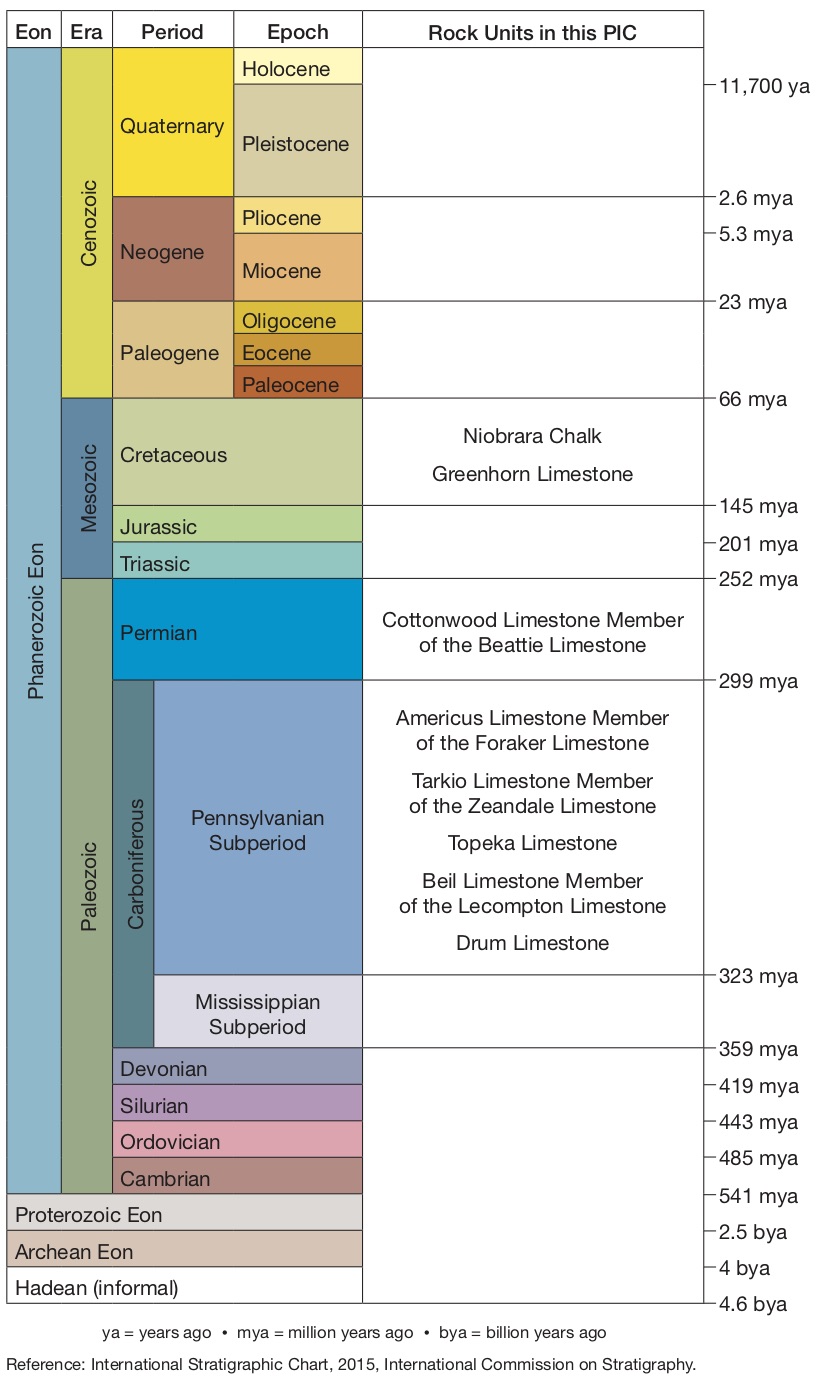
With Kansas rocks and fossils, we are primarily concerned with the late Paleozoic to Cenozoic eras, roughly the last 359 million years of geologic time. The oldest rocks at the surface, which occur in the extreme southeast corner of the state, were deposited during the Mississippian Subperiod, approximately 359 to 323 million years ago. Most fossils discussed in this circular occur in rocks deposited during the Pennsylvanian Subperiod and Permian and Cretaceous periods (figs. 1 and 2).
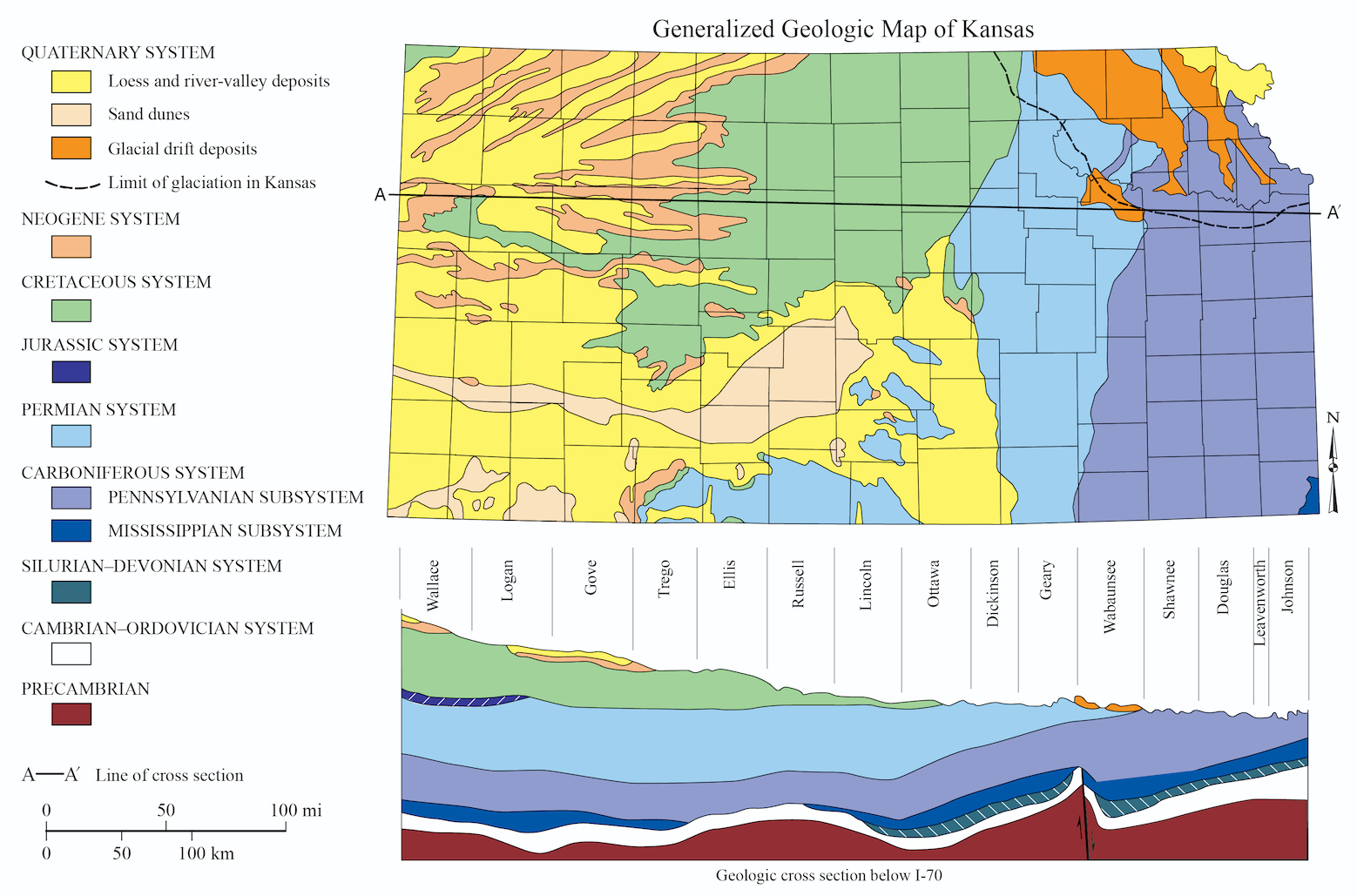
This circular gives a brief overview of fossils, fossilization, and geologic time; discusses the general characteristics of some of the state's common invertebrate fossils; and provides some basic information about collecting fossils in Kansas.
Fossils are the remains or evidence of ancient life. Fossils come in various forms—from bones and shells to carbon imprints to footprints and burrows. Fragmented or whole, fossils provide vital information about Earth and its inhabitants millions, even billions, of years ago.
Finding fossils is relatively easy, but becoming a fossil is not. Only a tiny fraction of organisms that have lived during the past 3.8 billion years are preserved as fossils. Instead, most were eaten, attacked by bacteria, fragmented, crushed, or dissolved or worn away by water movement—to name some common fates.
Several factors favor fossilization, but probably none is more important than the possession of hard parts—sturdy bones in vertebrates, thick shells in invertebrates, wood and seeds in plants. Hard parts hold up better to decay and destruction than such soft tissue as muscles and organs. Thus, for example, we find many more clams than worms in the fossil record.
Rapid burial is also essential for fossilization; it protects an organism from being eaten by scavengers, attacked by bacteria, or battered by running water or wave action. Generally, plants and animals that live in or fall into water are more likely to be buried quickly when they die. They settle to the seafloor, lake bottom, or riverbed and are buried by the sediment that accumulates over time. This is one reason that aquatic organisms are far better represented in the fossil record than those that lived on land.
Even if an organism is fossilized, it may subsequently be destroyed by ongoing geologic processes, such as mountain building and erosion. If a fossil escapes obliteration, it then becomes part of the fossil record. Still, the odds are decidedly against preservation as a fossil. Most organisms lived, died, and vanished without a trace.
Kansas has many fossil-bearing rocks at the surface, mostly limestone, sandstone, and shale. Limestone is composed mostly of the mineral calcite, or calcium carbonate (CaCO3), which is secreted by various animals and plants—such as oysters, corals, and algae—that live in aquatic, mostly marine, environments. Sandstone and shale are made up of sediment that eroded from other rocks. Sandstone, as its name suggests, is made up of sand grains, bonded together by natural cement. Shale is composed of compacted clay- and silt-sized particles too small to be seen without a microscope.
Most limestone (in Kansas and elsewhere) was deposited in warm, shallow seas, such as the ones that covered Kansas intermittently during the Pennsylvanian Subperiod and Permian and Cretaceous periods. These seas were not only good for making limestone but also for preserving the organisms that lived in these seas. The calcium carbonate ooze that collected on the sea floors made a perfect burial ground. Thus, Kansas limestone contains many fossils; indeed, some are made up almost entirely of fossils.
Most sandstones and shales also formed in marine environments. During periods of erosion, sediments were washed from the land and carried into the sea by streams. The coarser sediment, such as sand, settled out first, while the finer-grained clay- and silt-sized particles were carried farther out to sea. Thus, sandstone beds may indicate deposition on or very near shore, whereas layers of shale indicate deposition a little farther from shore.
Ammonoids—Ammonoids are extinct squidlike creatures that lived inside an external shell (fig. 3). They are related to the chambered Nautilus, and, like Nautilus, most were probably good swimmers, moving through the water by means of a kind of jet propulsion and eating fish, crabs, and other shellfish.
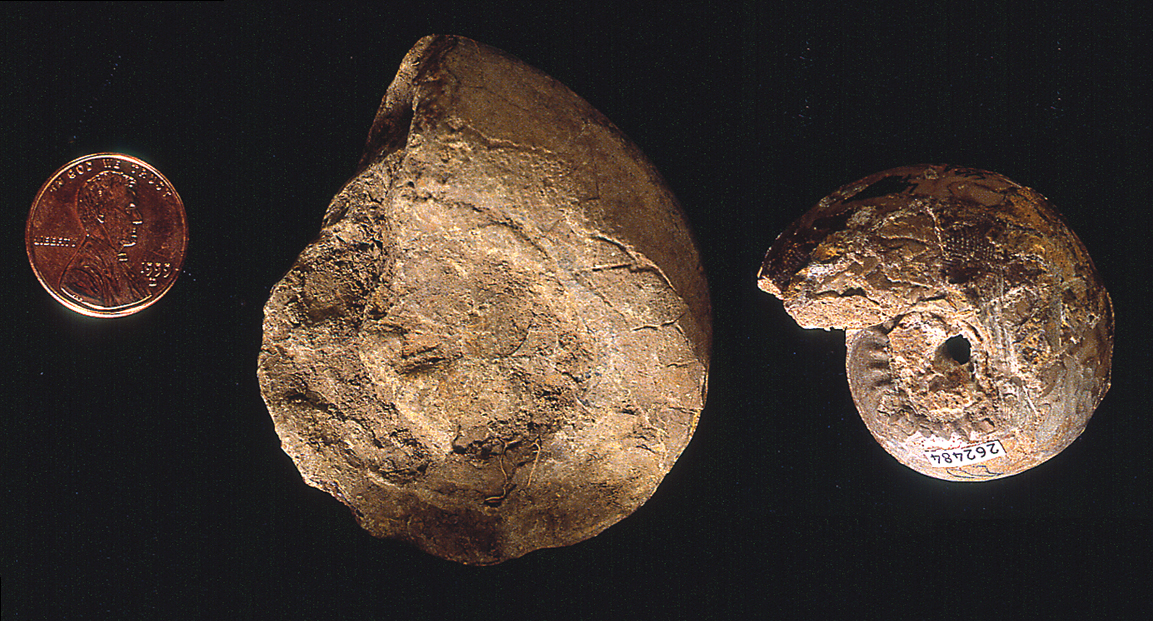
Ammonoids evolved during the early part of the Devonian Period, about 419 million years ago, and died out about 66 million years ago, during the mass extinction at the end of the Cretaceous Period that killed the dinosaurs and many other land and sea animals. Ammonoid fossils (ammonites) are common in sedimentary rocks around the world and are somewhat common in the Cretaceous rocks of western Kansas.
Many ammonoid shells were coiled in the same plane, like a cinnamon roll; others had straight or erratically coiled shells. The external surface of some shells was ornamented with different color patterns, ribs, nodes, or spines, but this ornamentation is not always preserved.
Internally, ammonoid shells were divided into many chambers by a series of intricately folded walls. The pattern of the folding can be seen in many specimens in which the outer shell has been removed. The junction between the wall and the outer shell produces a line called the suture, and these suture patterns are unique to each ammonoid species (fig. 4).
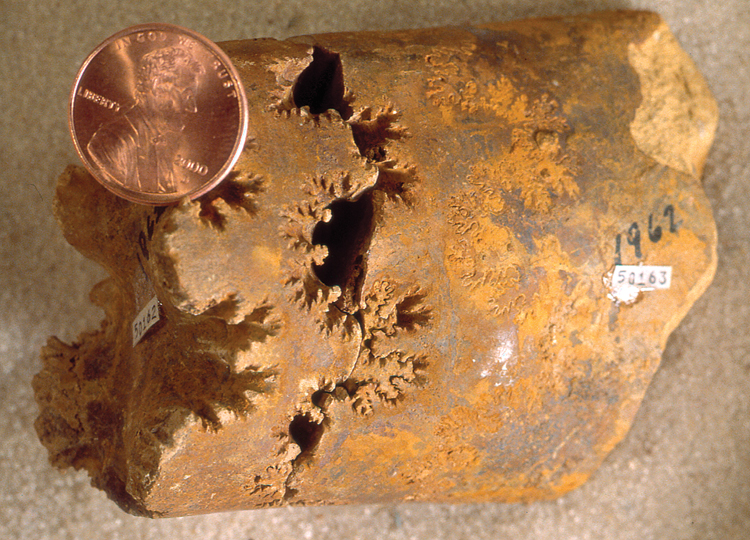
Most Paleozoic ammonoids were golf-ball sized or smaller. At the height of their diversity during the Cretaceous, larger ammonoids, some with diameters up to 10 feet (3 meters), were common. Ammonoids are relatively common fossils in the Cretaceous outcrops of central and western Kansas and less common in eastern Kansas, where smaller fossils occasionally are found in Pennsylvanian and Permian outcrops.
Brachiopods—Brachiopods (fig. 5) are marine animals that secrete a shell consisting of two parts called valves. They have an extensive fossil record, beginning in the early part of the Cambrian Period, about 541 million years ago, and their descendants live in today's oceans.
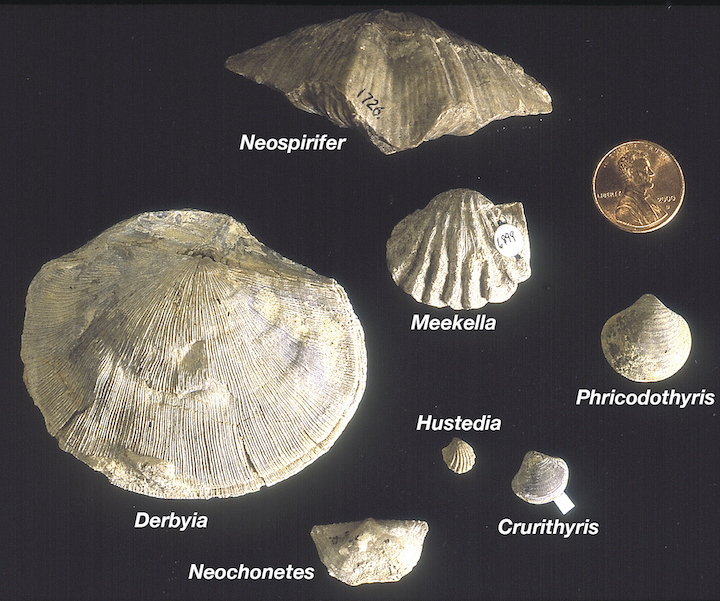
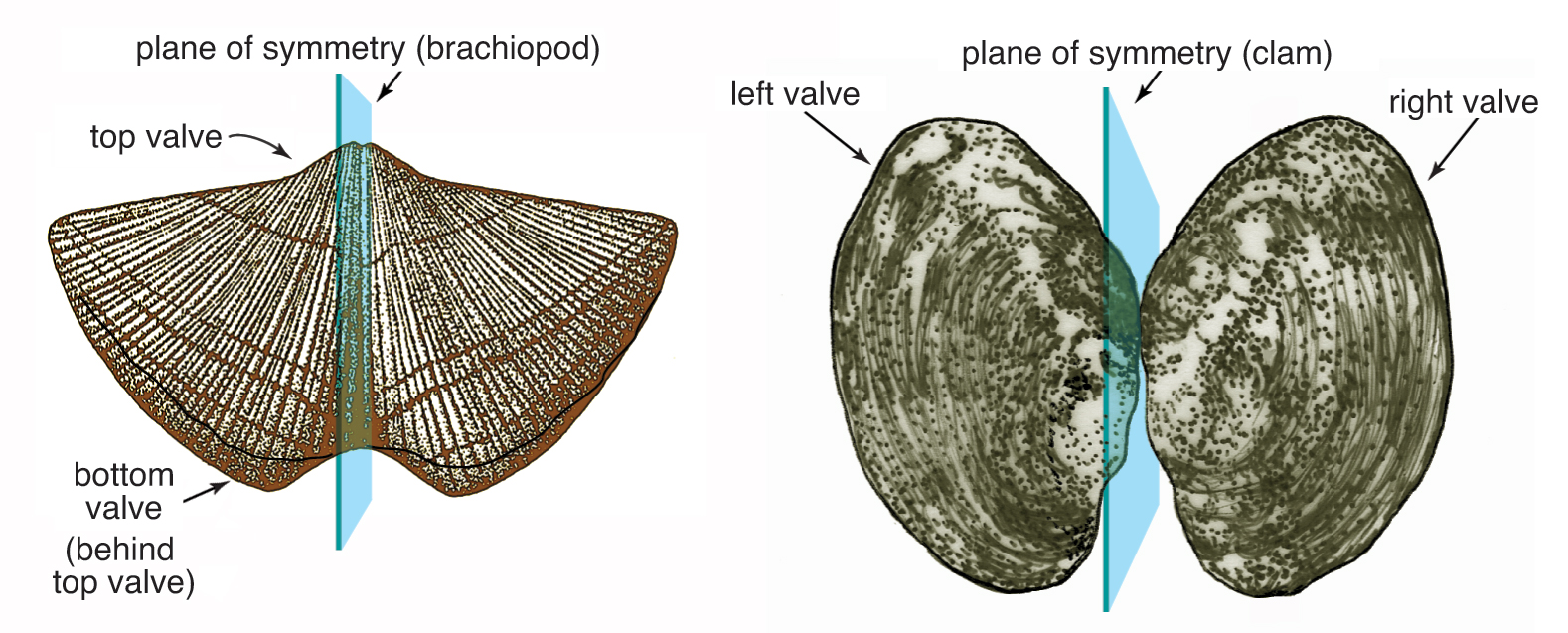
The name brachiopod comes from the Latin words for arm (brachio) and foot (pod) and refers to a paired, internal structure, which specialists initially thought was used for locomotion. This structure, called the lophophore, is actually used for feeding and respiration and is common to all brachiopods. Another distinctive feature is their bilaterally symmetrical valves, in which the right half mirrors the left, different from the symmetry of clams (fig. 6).
Brachiopod shells come in a variety of shapes and sizes. The outer surface of the valves may be marked by concentric wrinkles or radial ribs. Some brachiopods have prominent spines, but these are usually broken off and are found as separate fossils.
Brachiopods are one of the most common fossils in the Pennsylvanian rocks in eastern Kansas and are common in the younger Permian rocks. In spite of their abundance in many Cretaceous rocks worldwide, brachiopods are almost never found in the Cretaceous rocks of Kansas.
Bryozoans—Among the most abundant fossils in the world, bryozoans (fig. 7) are also widespread today, both in marine and freshwater environments, living at all latitudes and depths ranging downward to at least 27,900 feet (8,500 meters). Bryozoans are small animals (just large enough to be seen with the naked eye) that live exclusively in colonies.
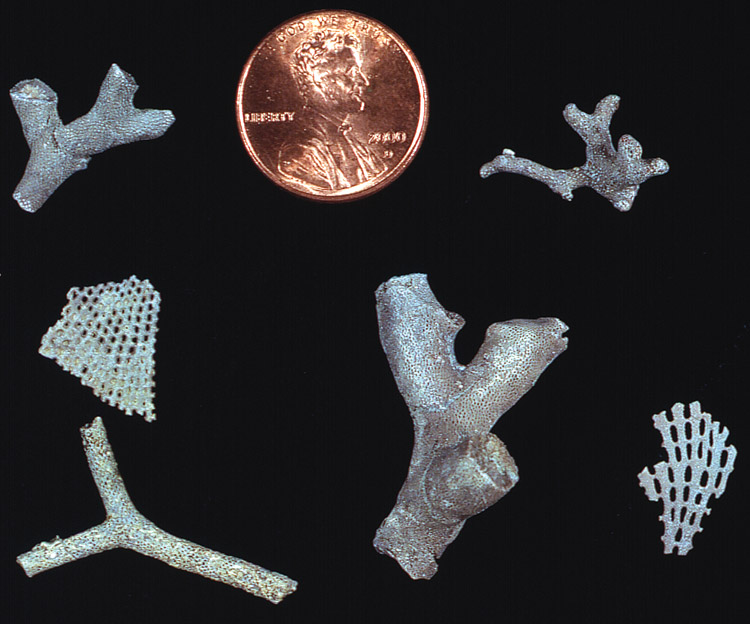
Marine bryozoans show up in the fossil record in the early part of the Ordovician Period, roughly 485 million years ago. In Kansas, fossil bryozoans are common in the Pennsylvanian and Permian rocks of the eastern part of the state. Throughout their long history, marine bryozoans have been abundant and widely distributed geographically.
Bryozoans are sometimes confused with corals, which are also colonial. Like corals, most bryozoans secrete external skeletons made of calcium carbonate, which form the framework of the colony. Bryozoans, however, are more complex organisms than corals and generally do not build reefs.
Some bryozoans built colonies that grew from the sea floor in branching structures; these fossils look something like twigs. Other species erected netlike frameworks, while still others spread like a crust on shells, rocks, plants, and even other bryozoan colonies. Almost all the fossils are fragments of colonies; only rarely is an entire colony preserved. Bryozoans are common fossils in the rocks of eastern Kansas and are less common in the Cretaceous rocks to the west.
Clams and other bivalves—Clams (fig. 8) and their relatives (oysters, scallops, and mussels) are often called bivalves (or bivalved mollusks) because their shells are composed of two parts called valves. Inside the bivalve's hard shell, the body consists of two lobes, one lining each valve. A muscular structure called a foot, present in most bivalves, is used for locomotion and burrowing.
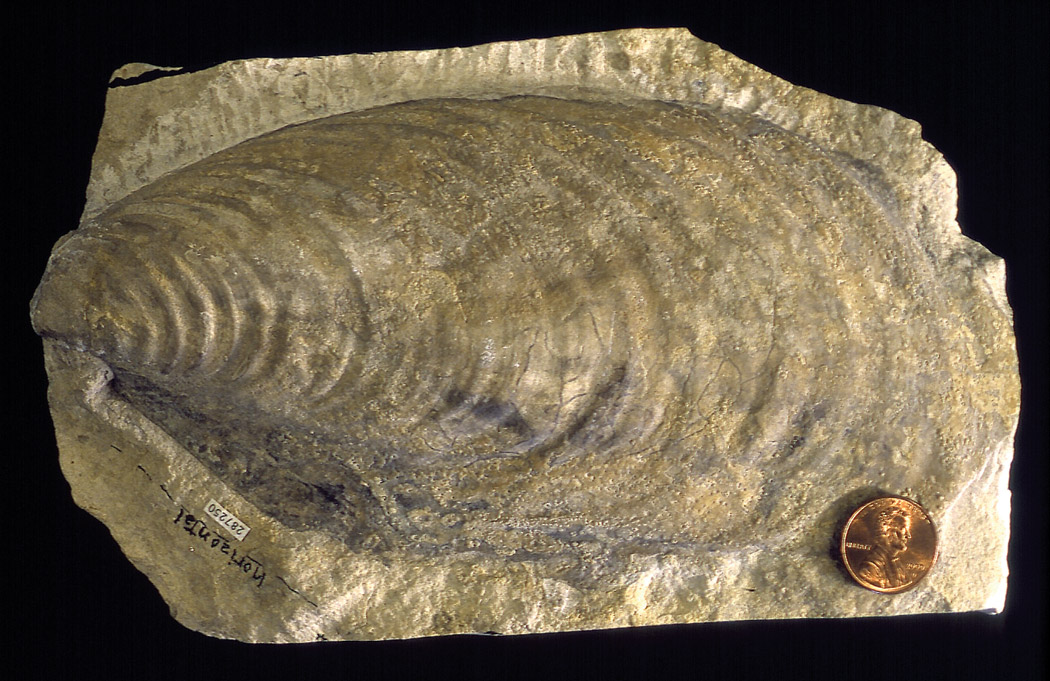
Bivalve fossils first appear in rocks that date to the middle of the Cambrian Period, about 510 million years ago. Fossil bivalves come in many different shapes and sizes and have a wide range of external markings. Typically the right and left valves are symmetrical (see fig. 6). Some bivalves, such as oysters, do not have symmetrical valves.
The oldest fossil clams are generally the smallest; most Cambrian species are tiny, just large enough to see without magnification. Over time, larger species evolved. The largest—inoceramid clams found in western Kansas—are as much as 6 feet (1.8 meters) in diameter (fig. 8). These extinct clams lived in groups on the sea floor of the shallow ocean that covered the interior of North America during the Cretaceous Period and are preserved in great numbers in the rocks of the Niobrara Chalk. Some of these huge fossils are covered with encrusting oysters. Others have been found with a variety of fish fossils between their shells, indicating that the fish used the giant clam as a safe feeding place.
In addition to the huge inoceramid clams, smaller clams and oysters are also common in the Cretaceous rocks of western Kansas, particularly in the Greenhorn Limestone. In the eastern part of the state, both marine and freshwater bivalves occur as fossils in Pennsylvanian and Permian limestones and shales.
Corals—Corals (figs. 9 and 10) are simple animals that secrete skeletons made of calcium carbonate. They are close relatives of sea anemones and jellyfish and are the main reef builders in modern oceans. Corals can be either colonial or solitary. They live attached to the seafloor and feed by trapping small animals with their tentacles.
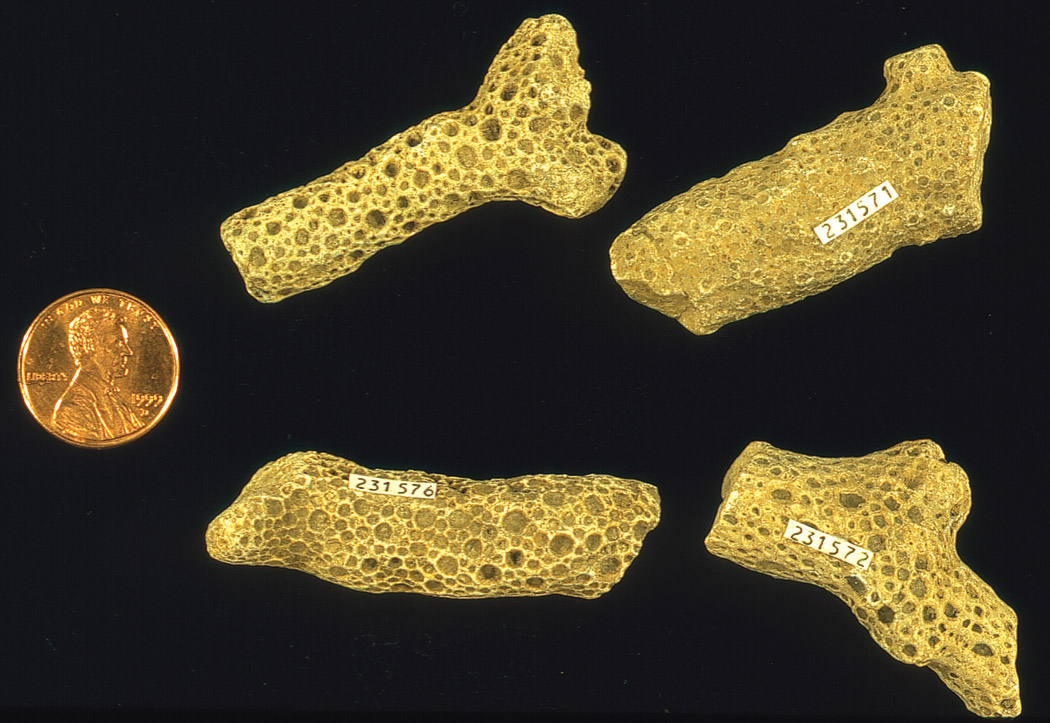
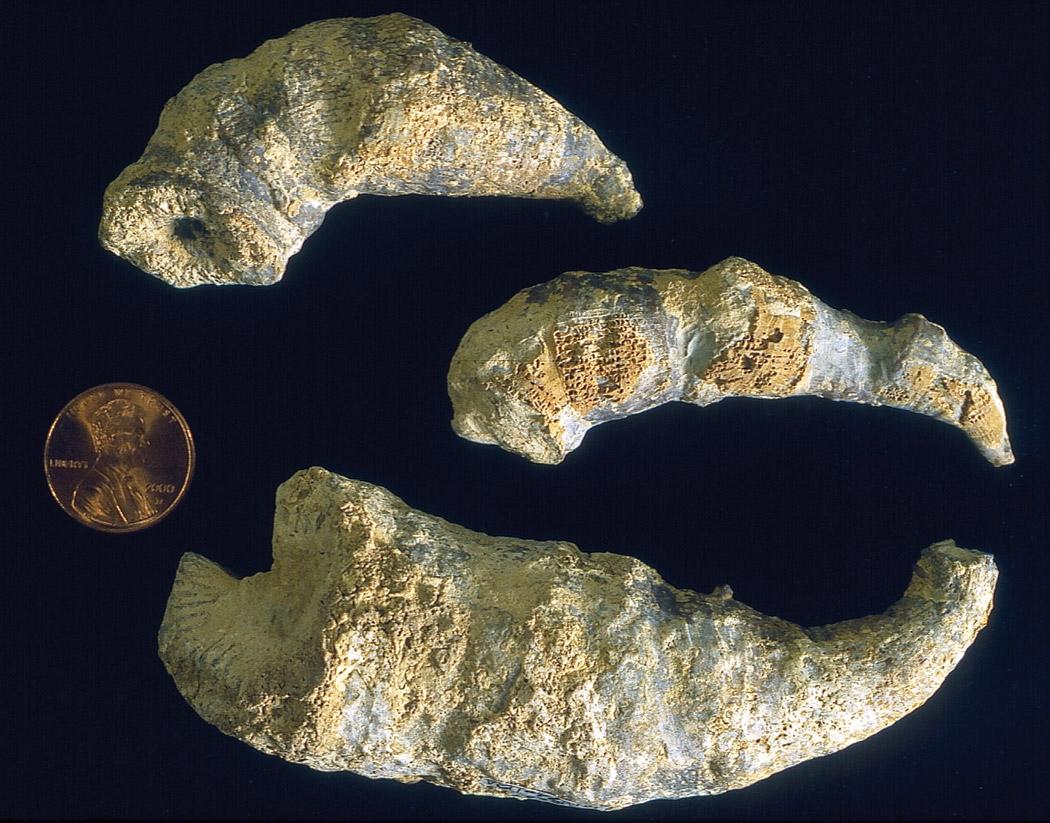
As fossils, corals are found worldwide in sedimentary rocks. The earliest fossil corals come from the middle of the Cambrian, about 510 million years ago. In Kansas, they are fairly common in Pennsylvanian and Permian rocks.
Two groups of corals were important inhabitants of the Pennsylvanian and Permian seas—tabulate and rugose corals. Tabulate corals were exclusively colonial and produced calcium carbonate skeletons in a variety of shapes: moundlike, sheetlike, chainlike, or branching (fig. 9). Rugose corals are characterized by the wrinkled appearance of their outer surface. (Rugose comes from the Latin word for wrinkled.) Rugose corals may be either solitary or colonial. Because solitary rugose corals are commonly shaped like a horn, these fossils are sometimes called horn corals (fig. 10).
Both tabulate and rugose corals died out in the major extinction that occurred at the end of the Permian Period, which marked the end of the Paleozoic Era. Tabulate and rugose corals are common in the rocks of eastern Kansas. Rugose corals are especially common in the Beil Limestone Member of the Lecompton Limestone (Pennsylvanian Subperiod).
Crinoids—Crinoids (fig. 11) are echinoderms, animals with rough, spiny surfaces and a special kind of radial symmetry based on five or multiples of five. They are related to starfishes, sea urchins, sea cucumbers, and brittle stars.
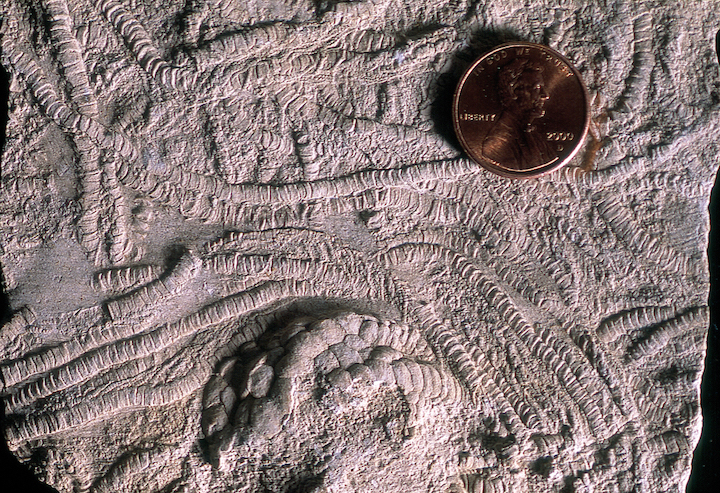
Crinoids have lived in the world's oceans since at least the beginning of the Ordovician Period. They flourished during the Paleozoic Era but came close to extinction toward the end of the Permian Period. The one or two surviving lineages eventually gave rise to the crinoids populating the world's oceans today.
Crinoids can be divided into three main body parts: the stem, which attaches the animal to the ocean floor and consists of disk-shaped pieces stacked on top of each other; the cuplike calyx, which sits atop the stem and contains the mouth, the digestive system, and the anus; and the segmented, food-gathering arms, ranging in number from 5 to 200.
Stem pieces, which may be round, elliptical, pentagonal, or star-shaped with a hole in their centers, are abundant in eastern Kansas limestones and shales. Occasionally, a calyx is found. Although it is rare for an entire crinoid to be preserved, Kansas is home to a spectacular and rare fossil called Uintacrinus (fig. 11). These crinoids, from the Niobrara Chalk of western Kansas, lived during the latter part of the Cretaceous Period. Uintacrinus is a stemless crinoid, and specimens of these beautifully preserved Kansas fossils are on display in many of the major museums in the United States and Europe.
Fusulinids—Fusulinids (fig. 12) were small marine organisms that populated the seas worldwide during the Pennsylvanian Subperiod and Permian Period. The earliest fusulinids occur in rocks deposited during the late Mississippian Subperiod. Fusulinids became extinct during the mass extinction at the end of the Permian Period.
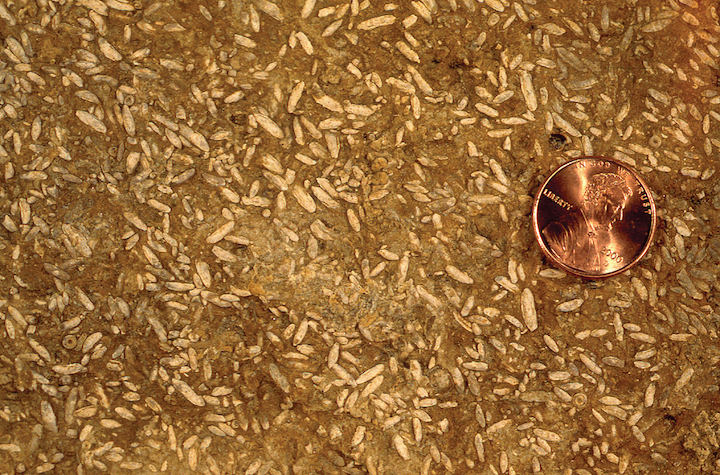
Fusulinids were single-celled organisms, about the size and shape of a grain of wheat. In fact, the common Kansas fusilinid Triticites gets its name from the Latin word for wheat. Unlike multicellular animals, which accomplish basic life functions (such as locomotion, feeding, digestion, and reproduction) through a wide range of specialized cells, fusulinids and other single-celled organisms have to carry on these same functions within the confines of a single cell. As a result, the cell is highly complex.
The earliest fusulinids were smaller than the head of a pin and somewhat spherical. They evolved rapidly, typically becoming progressively longer and narrower; by the late Permian Period, some forms were more than 4 inches (10 centimeters) long, an amazing size for a single-celled organism.
Fusulinid fossils are found on all continents except Antarctica and are common in the Permian and Pennsylvanian rocks of eastern Kansas. In fact, some Kansas limestones—for example, the Cottonwood Limestone Member of the Beattie Limestone, the Tarkio Limestone Member of the Zeandale Limestone, the Beil Limestone Member of the Lecompton Limestone, and the Americus Limestone Member of the Foraker Limestone—are made up almost exclusively of fusulinid fossils in some places.
Gastropods—Gastropods are an extremely diverse and abundant group that includes snails, slugs, conchs, whelks, and limpets (fig. 13). Like the familiar snail, most gastropods (except for slugs) have a single coiled shell.
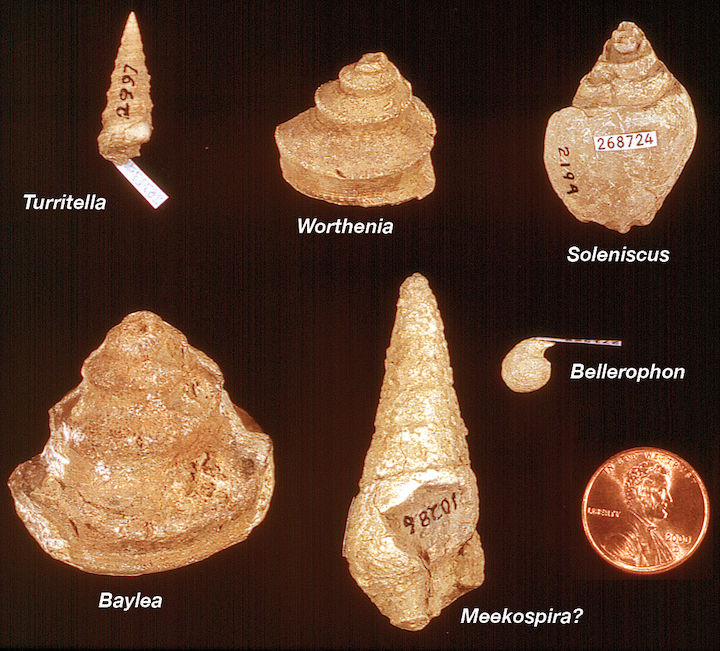
The earliest undisputed gastropods date from the Late Cambrian Period. By the beginning of the Mesozoic Era, many had adapted to terrestrial and freshwater environments. The long fossil record and present-day abundance and diversity of gastropods attest to their evolutionary success. Over time, they have withstood a number of major extinction events that wiped out other creatures.
In a typical shelled gastropod, such as the snail, the soft body parts include those that normally extend outside the shell—the head and foot—and those that remain inside—the mantle and visceral mass. The gastropod shell forms a hollow, twisted, or coiled cone that increases in width from its initial point, the apex, to the opening from which the head and foot protrude. In many gastropods, a platelike cover, the operculum, is attached to the foot and closes the shell opening when the head and foot are retracted within the shell.
The shells of fossil gastropods vary enormously. Some are coiled in one plane (similar to the shells of coiled ammonoids); others are coiled so that they produce spires of varying heights. The outer surface of the shells may be ornamented with ridges, grooves, bumps, spines, or other markings.
In Kansas, fossils of marine snails are common in the Pennsylvanian and Permian rocks of the eastern part of the state and in the Cretaceous rocks farther west. Fossils of terrestrial and freshwater snails are also common in some Pleistocene deposits in northwestern and northeastern Kansas.
Trilobites—Trilobites were among the first multicellular animals to live in the world's oceans (fig. 14). Their fossil record extends back 529 million years to the early part of the Cambrian Period and indicates that trilobites evolved rapidly in the shallow seas of this time. Because their fossils are so common in Cambrian rocks, the Cambrian Period is sometimes called the age of trilobites. Trilobites appear to have died out completely near the end of the Permian Period, just before the huge extinction that marked the end of the Paleozoic Era.
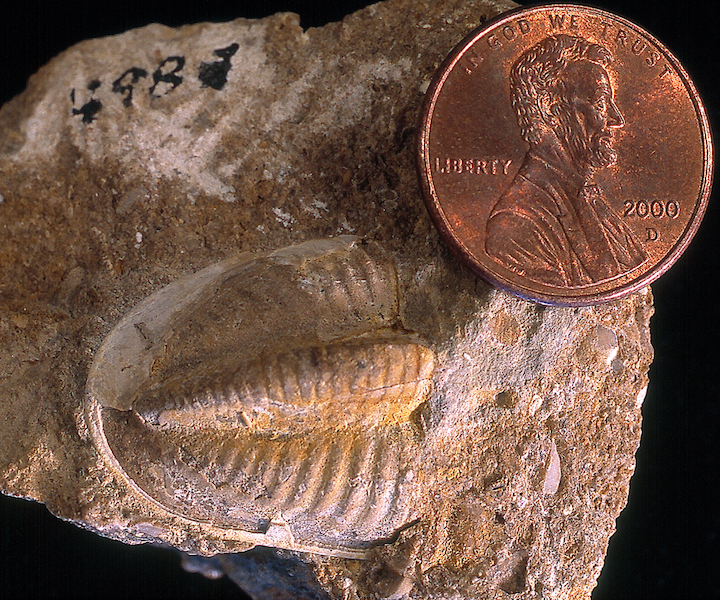
Trilobites had a hard external skeleton, or carapace, that consisted of three main parts: a head, the cephalon, which is typically crescent shaped; a middle region called the thorax, made up of 2 to 61 overlapping segments; and a tail, the pygidium, in which the segments were fused (fig. 15). Complete trilobite carapaces are uncommon because the skeletal parts were usually scattered by currents, scavengers, or other processes.
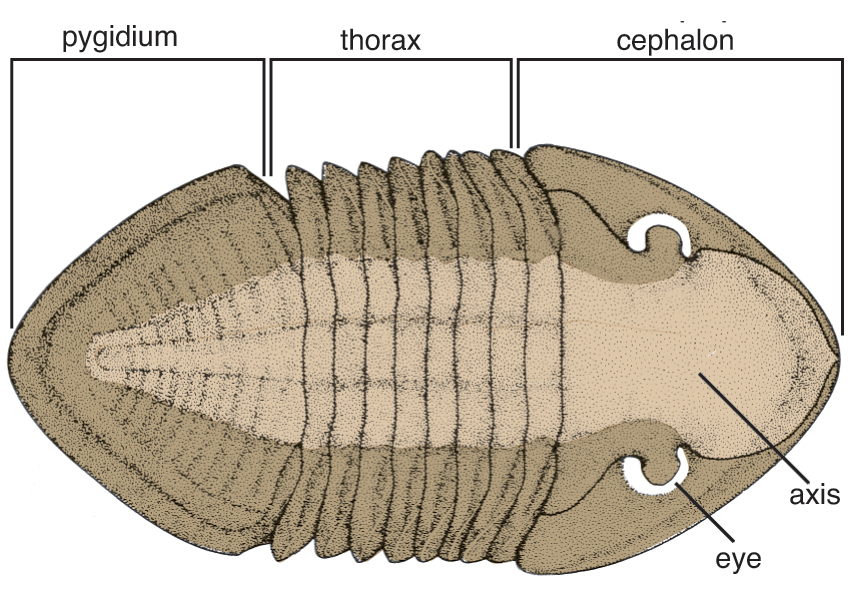
During their long history, trilobites evolved a multitude of forms. Some were spiny; others smooth. Some had enormous eyes; others were blind. Some were tiny, about the size of a ladybird beetle; others were the size of a large serving platter, though most were about 1 to 3 inches (2.5 to 7.5 centimeters) in length.
In Kansas, the oldest rocks that crop out at the surface are from the last part of the Paleozoic, when trilobite numbers had dwindled greatly. Thus, trilobites are not common fossils in Kansas, though they are sometimes found in Pennsylvanian and Permian rocks.
As mentioned in the introduction, many Kansas outcrops contain invertebrate fossils, and those in the Smoky Hills region of north-central Kansas and in the eastern third of Kansas, from the Flint Hills to the Missouri border, are especially fossiliferous. Using county-level geologic maps available from the Kansas Geological Survey (see https://www.kgs.ku.edu/General/Geology/index.html), you can target some likely places to hunt for specific kinds of fossils. Fossil hunting on private land requires the permission of the landowner.
Specific fossil-collecting sites are described in various guidebooks published by the Kansas Geological Survey. They are available online at http://www.kgs.ku.edu/Publications/Trips/index.html or by contacting the KGS Publications Sales office at 785-864-3965.
Museums are great places to view spectacular specimens and learn more about fossils. For help identifying fossils, contact any of the museums listed here or the geology or earth science department of your local college or university.
Sternberg Museum of Natural History
Fort Hays State University, Hays
Biodiversity Research Center and Natural History Museum
University of Kansas, Lawrence
Johnston Geology Museum
Emporia State University, Emporia
Fick Fossil and History Museum
Oakley, Kansas
Available from the Kansas Geological Survey Publications Sales office (785-864-3965):
Windows to the Past—A Guidebook to Common Invertebrate Fossils of Kansas, by Liz Brosius, Kansas Geological Survey, 2006, Educational Series 16, 56 p.
Rocks, Minerals, and Fossils of Kansas, by Catherine S. Evans, Susan Stover, and Julie Tollefson, Kansas Geological Survey, 2018, Educational Series 18, 24 p.
Kansas Geological Survey, Public Outreach
Comments to: webadmin@kgs.ku.edu
Revised web version January 2022
URL: